
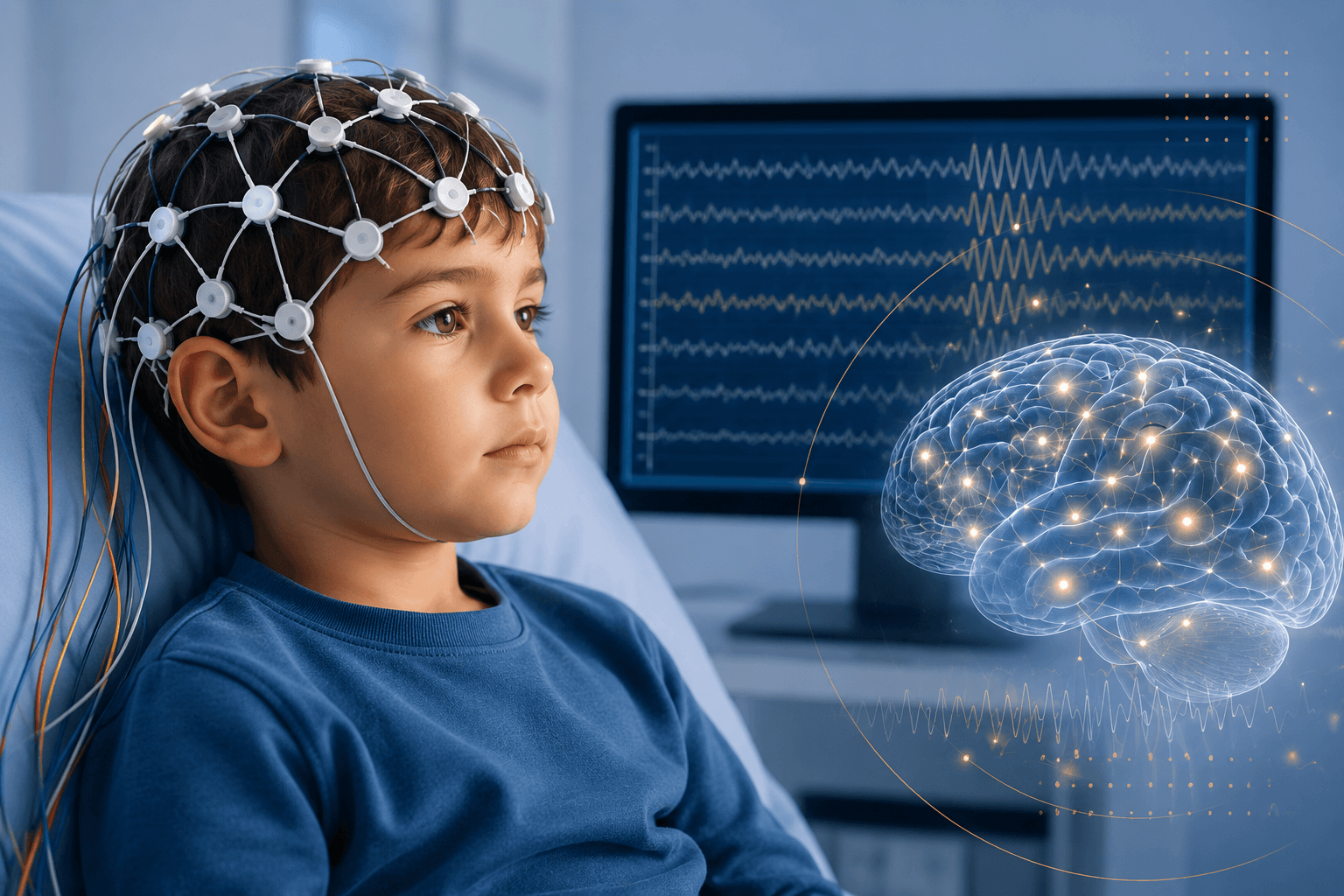
EEG: What Is It?
EEG (electroencephalography) is a painless, non-invasive examination method used to record the brain’s electrical activity through electrodes placed on the scalp. It is an important diagnostic aid in pediatric neurology, particularly in the evaluation of seizures and certain neurological conditions.
Why is EEG requested in children?
When a child experiences a seizure-like event, EEG examination can contribute to the diagnostic process alongside the characteristics of the event and the child’s clinical evaluation.
In particular:
- Recurrent seizures or suspected seizures
- Unexplained staring episodes or brief changes in consciousness
- Unusual movements occurring during sleep
- Evaluation of a known epilepsy diagnosis
- Monitoring of certain neurological conditions
EEG may be requested by a physician in such situations.
How is an EEG performed?
During an EEG, small electrodes are placed on the child’s scalp. These electrodes record the brain’s electrical activity; no electricity is delivered to the brain.
During the procedure, it is important for the child to remain calm and as still as possible to ensure good recording quality. Depending on the child’s age and the purpose of the examination, recordings may be obtained while the child is awake, asleep, or during the transition to sleep.
Does a normal EEG mean that the child does not have epilepsy?
Not always.
EEG, although an important diagnostic aid in the evaluation of epilepsy, cannot establish a diagnosis on its own or definitively rule out epilepsy. EEG findings are evaluated together with the characteristics of the seizure, the child’s medical history, neurological examination, and, when necessary, other investigations.
Therefore, the EEG result should always be interpreted together with the child’s clinical findings.
Does EEG Harm the Child?
Standard EEG is generally a safe and painless examination that does not require delivering electricity to the brain.
The child is not exposed to any electrical current when the electrodes are placed. In some EEG recordings, certain activation methods may be used under the guidance of the physician.
Conclusion
EEG is an important diagnostic aid in the evaluation of seizures and epilepsy in children. However, it is not appropriate to evaluate the EEG result on its own.
The details of the event experienced by the child, clinical history, examination findings, and other necessary investigations are evaluated together to reach a conclusion.
Medical Information: This article has been prepared for general informational purposes and does not replace a diagnosis or treatment recommendation. Please consult a pediatric neurologist for evaluation and treatment decisions regarding your child.